Cross-Cultural Adaptations of Roulette Rules in Asian Versus European Regulated Markets
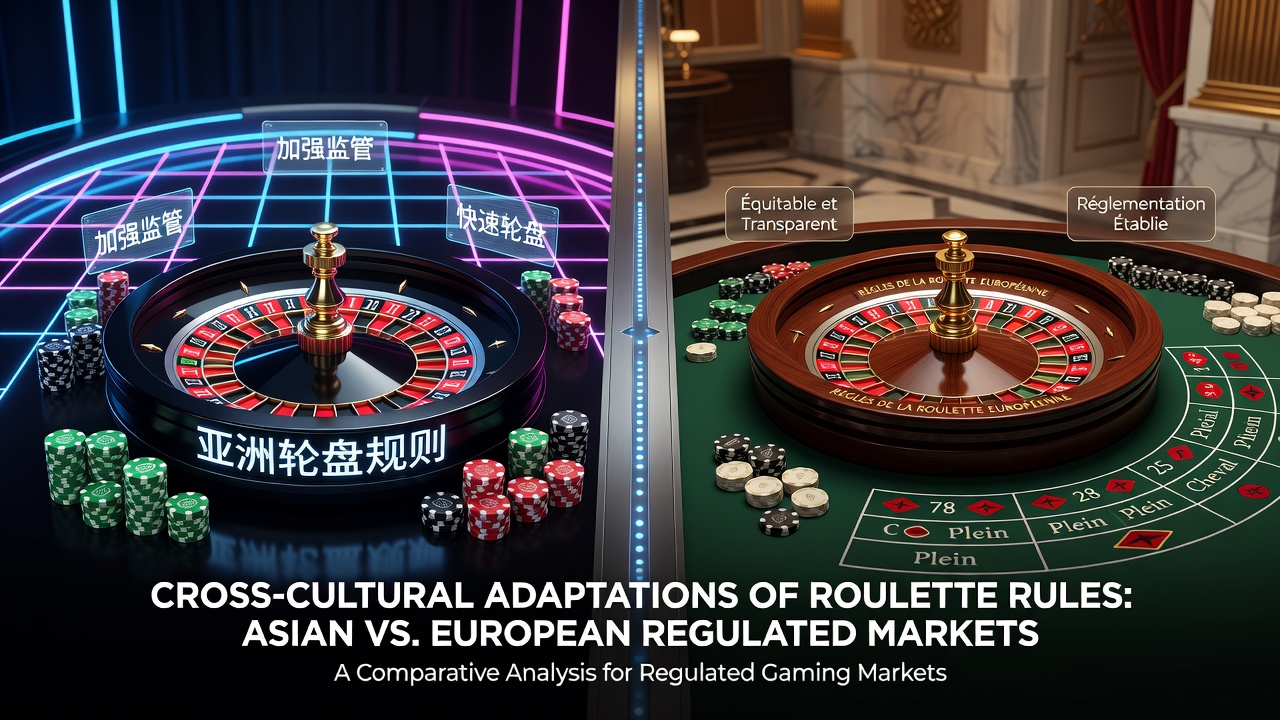
European regulated markets maintain a strong emphasis on single-zero wheels across France, Germany, and the Netherlands, where rules such as La Partage and En Prison reduce the house edge on even-money bets to 1.35 percent. These mechanisms return half the stake on zero outcomes, a practice codified in French gaming statutes since the 19th century and preserved through contemporary oversight by bodies including the Malta Gaming Authority. Asian markets, by contrast, often incorporate faster table rotations and elevated minimum bet thresholds, particularly in Macau and Singapore, where operators adjust payout structures to accommodate high-volume VIP play while adhering to local licensing conditions.
Wheel Configurations and Regulatory Foundations
European jurisdictions standardize the 37-pocket wheel, yet they layer additional player protections that alter effective odds without changing the physical layout. Data from the European Gaming and Betting Association shows that France and Belgium enforce these safeguards uniformly, resulting in consistent return-to-player percentages above 98.6 percent for affected bets. Asian regulators permit both single-zero and occasional double-zero configurations depending on the jurisdiction, with Singapore's Casino Regulatory Authority requiring operators to disclose all rule variations in real time to maintain transparency across integrated resorts.
Betting Limits and Table Dynamics
Minimum wagers in European casinos typically range from €1 to €25 on standard tables, scaling upward only in dedicated high-limit salons. Asian venues frequently establish base limits at the equivalent of $50 to $100, a threshold designed to align with regional player demographics and capital flow patterns documented in quarterly filings from the Macau Gaming Inspection and Coordination Bureau. Maximum limits also diverge, with some Singapore properties extending cap bets to six figures on individual numbers during peak evening sessions, whereas European caps remain more modest outside private gaming areas.
Side Bets and Cultural Rule Modifications
European tables rarely introduce supplemental wagers beyond the classic layout, preserving the original 2.70 percent house edge on most inside bets. Asian operators have introduced localized variations such as neighbor bets tied to zodiac themes or progressive jackpot side wagers that trigger when specific number clusters appear, adaptations reported in industry analyses from the University of Macau's gaming research division. These additions remain subject to pre-approval processes that verify mathematical fairness before deployment on live floors.
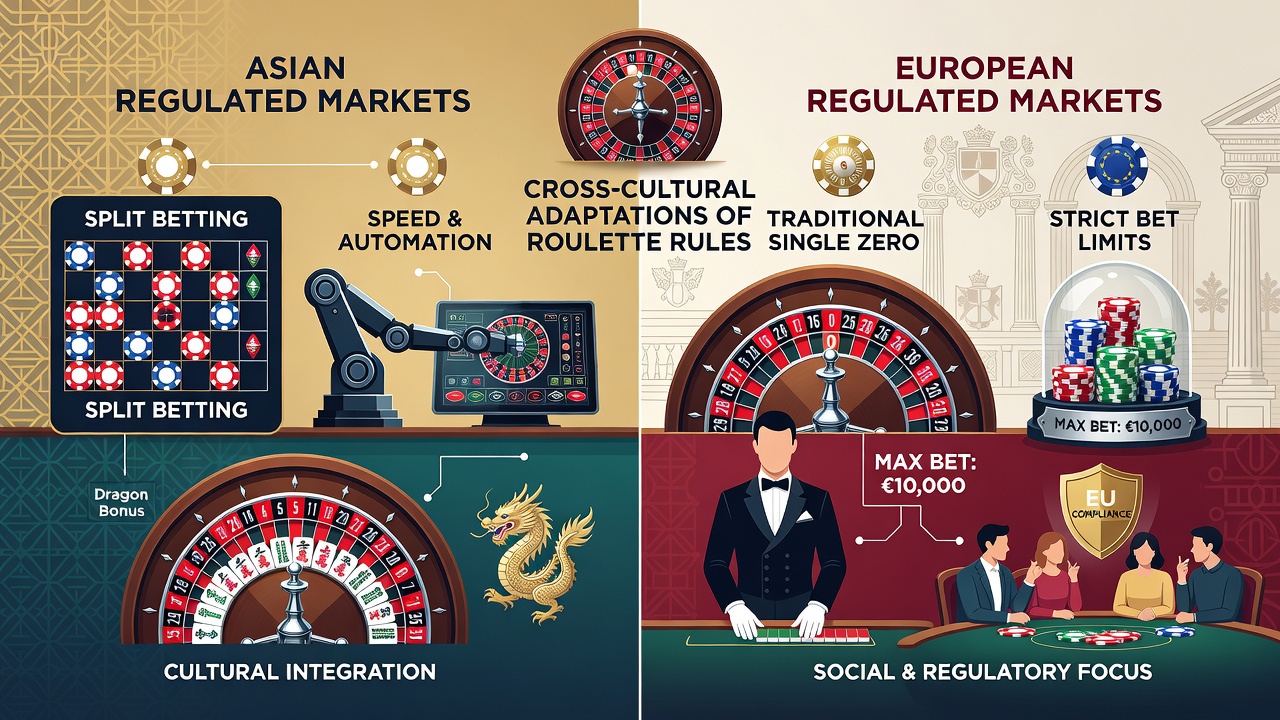
Language accommodations further distinguish the markets. European casinos print rules in multiple EU languages on felt and digital displays, while Asian properties often deploy bilingual or trilingual rule cards alongside electronic terminals that convert odds into local currency units instantly. Such interfaces reduce disputes and support compliance audits conducted by regional authorities throughout 2025 and into July 2026.
Technological Integration and Oversight
Live dealer streams in Europe must comply with latency and encryption standards set by national gaming commissions, ensuring that rule applications remain identical whether players participate on-site or remotely. Asian platforms emphasize mobile-first interfaces that allow real-time adjustment of betting denominations, a feature rolled out across several Macau properties during the first half of 2026 to meet updated digital licensing requirements. Both regions require independent testing laboratories to certify random number generators and physical wheel calibrations before any rule set receives final approval.
Player Protection Measures Across Regions
Session time limits and loss caps appear more frequently in European regulations, where operators must offer self-exclusion tools integrated directly into the gaming interface. Asian frameworks focus on identity verification and anti-money laundering protocols that influence how large bets are recorded and reported, yet they still mandate cooling-off periods for high-rollers under Singapore's Remote Gambling Act amendments. These divergent priorities shape how each market presents core roulette mechanics while satisfying overarching legal mandates.
Conclusion
Regulatory philosophies in Asia and Europe produce measurable differences in wheel specifications, betting thresholds, and supplementary features, all while preserving the fundamental structure of roulette. Observers tracking developments through mid-2026 note that cross-border operators continue refining localized adaptations to meet distinct compliance landscapes without altering the game's core probabilities. These variations reflect broader cultural and administrative priorities that govern how chance-based entertainment is structured and supervised on each continent.