Examining Synchronization Protocols Between Mobile Applications and Live Dealer Studios for Consistent Roulette Experiences
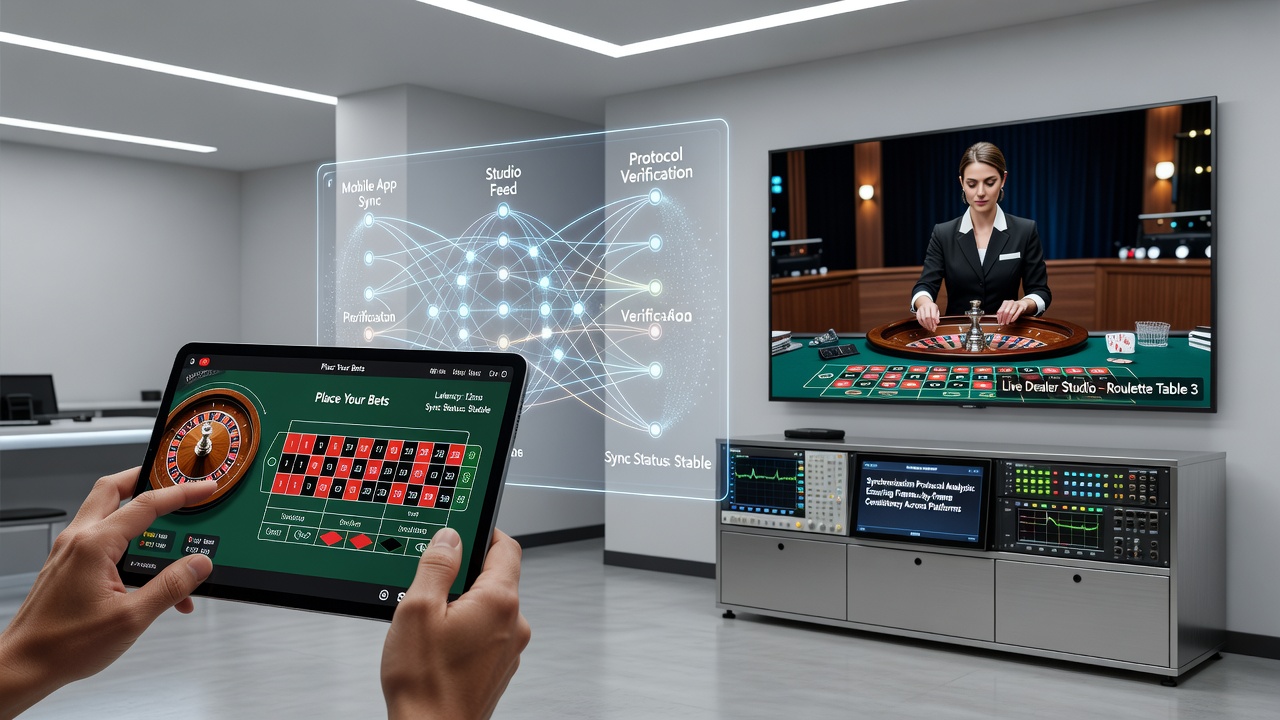
Live dealer roulette platforms rely on precise coordination between studio operations and mobile interfaces to deliver uniform outcomes across devices and networks. Data from industry monitoring shows that synchronization protocols manage video streams, bet placements, and result confirmations through layered communication standards that reduce latency below 200 milliseconds in optimized setups. Operators deploy combinations of WebRTC for real-time video, timestamped packet delivery, and redundant error-correction mechanisms to maintain alignment even when users switch between Wi-Fi and cellular connections.
Core Technical Components in Use
Protocol stacks begin with video encoding at the studio level, where cameras capture wheel spins and dealer actions before compression occurs through H.264 or newer AV1 codecs. Mobile applications receive these streams alongside metadata packets that carry wheel position data, ball trajectory details, and timestamp references. According to technical evaluations published by the New Jersey Division of Gaming Enforcement, such metadata enables cross-verification that prevents discrepancies between the visual feed and the recorded outcome sequence.
Transmission occurs over UDP for speed-critical elements while TCP handles critical bet confirmations and payout calculations. Buffering algorithms adjust dynamically based on measured jitter, and adaptive bitrate streaming responds to fluctuating bandwidth by switching quality levels without interrupting the game flow. Observers note that these adjustments occur within single-frame intervals, preserving the perception of continuous action for players in regions with variable network performance.
Regulatory Frameworks Guiding Implementation
Jurisdictions require documented testing of synchronization accuracy before licensing approvals. The Malta Gaming Authority outlines standards that mandate independent audits of latency thresholds and failover procedures, ensuring that any disruption in one data channel triggers automatic fallback to backup streams within defined time windows. Reports from these audits indicate that compliant systems achieve 99.8 percent or higher consistency rates across thousands of simulated sessions conducted during certification processes.
Additional oversight comes from bodies such as iGaming Ontario, which tracks cross-border data flows and requires operators to log synchronization events for regulatory review. These logs capture packet loss rates, resynchronization triggers, and recovery times, creating datasets that support ongoing refinement of protocol parameters. In June 2026, updated compliance checklists from several North American regulators began incorporating metrics for 5G network integration, reflecting increased mobile traffic volumes.
Case Examples from Operational Environments
One European operator integrated a hybrid protocol combining RTP extensions with custom timestamp servers, resulting in measurable reductions in out-of-sync incidents during peak evening hours. System logs revealed that resynchronization events dropped by 42 percent after deployment, while average session durations increased proportionally. A separate deployment in an Asian studio network employed machine-learning models to predict network congestion patterns and pre-emptively adjust buffer sizes, maintaining frame alignment across multiple carrier networks simultaneously.
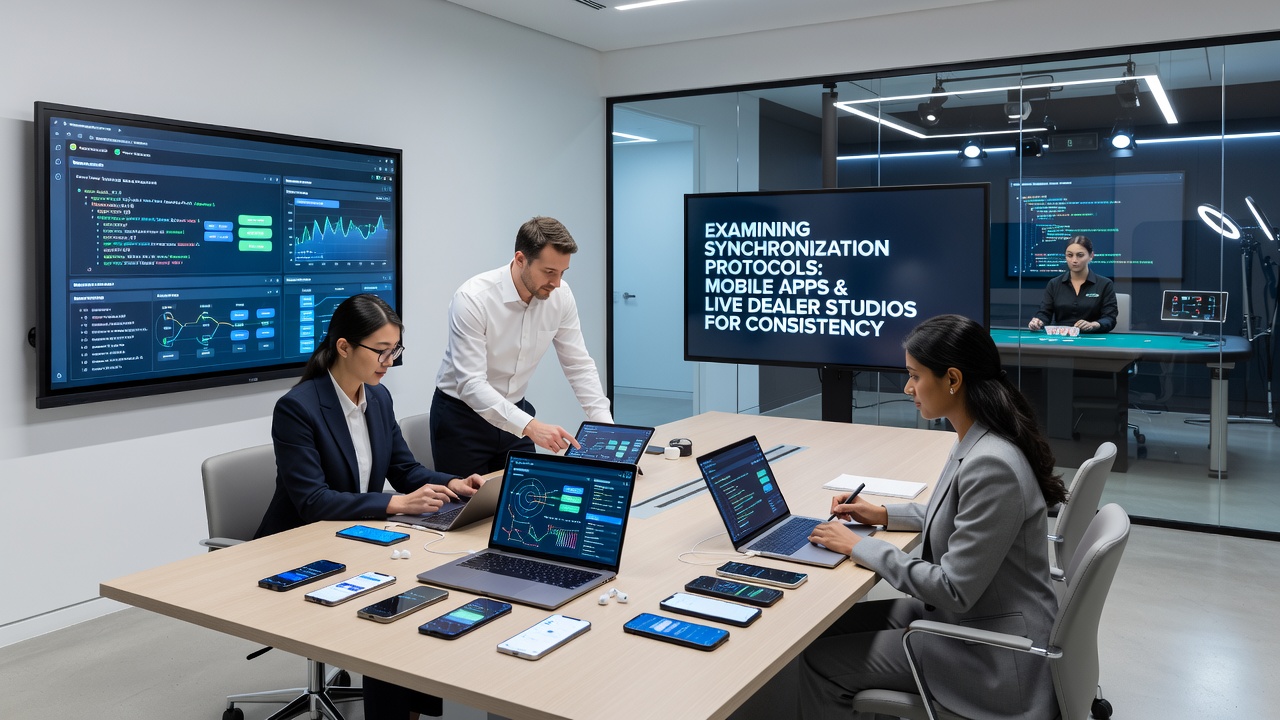
These implementations demonstrate that protocol design must account for regional infrastructure differences. Networks in densely populated urban zones often contend with higher interference levels than those serving suburban or rural users, prompting operators to maintain region-specific configuration profiles that activate automatically based on detected IP geolocation and carrier identifiers.
Emerging Adjustments in Mid-2026
Industry reports compiled through June 2026 highlight incremental adoption of QUIC protocol variants for certain metadata channels, offering improved multiplexing and connection migration capabilities when users move between access points. Testing conducted by research groups affiliated with the University of Nevada, Reno, documented sub-100 millisecond handoff times in controlled trials involving live dealer feeds. Such performance gains become relevant as 5G standalone networks expand coverage, allowing higher resolution streams without proportional increases in synchronization errors.
Security layers integrated into these protocols include end-to-end encryption of outcome data and periodic nonce challenges that verify stream integrity at the application level. Any mismatch between decrypted results and visual wheel positions triggers an immediate game suspension and manual review, a safeguard documented in operational guidelines from multiple licensed jurisdictions.
Conclusion
Synchronization protocols form the operational backbone that enables consistent roulette experiences across mobile applications and live dealer studios. Through coordinated use of streaming standards, timestamp verification, and regulatory-mandated testing, platforms sustain alignment despite variable network conditions. Continued evolution in protocol efficiency, documented through audits and technical evaluations, supports ongoing expansion of live dealer offerings while meeting established fairness and reliability benchmarks across different regulatory regions.