Governor Spanberger Vetoes Senate Bill 756, Blocking Forced Casino Referendum in Tysons Corner
Governor Spanberger Vetoes Senate Bill 756, Blocking Forced Casino Referendum in Tysons Corner
In April 2026, Virginia Governor Abigail Spanberger delivered a decisive veto on Senate Bill 756, a measure that aimed to compel the Fairfax County Board of Supervisors to conduct a referendum on a proposed casino resort in Tysons Corner, even though local leaders stood firmly against it; this action not only preserved the county's stance but also highlighted ongoing debates about state intervention in municipal gambling choices. Turns out, the bill had navigated through the General Assembly with support from proponents who saw Tysons as prime real estate for economic boosts, yet local supervisors argued it clashed with community priorities and traffic concerns already plaguing the bustling Northern Virginia hub.
The Path of Senate Bill 756 Through the Legislature
Senate Bill 756 emerged early in the 2026 session, sponsored by senators eyeing expanded gaming revenue to fund infrastructure; it specifically targeted Tysons Corner, a commercial powerhouse just outside Washington, D.C., where developers had pitched a multibillion-dollar casino complex complete with hotels, retail, and entertainment venues that promised thousands of jobs and tax dollars flowing back to state coffers.
But here's the thing: Fairfax County supervisors rejected the idea outright back in preliminary discussions, citing risks to the area's family-friendly vibe and already strained roadways; undeterred, bill backers pushed forward, arguing that a public vote would let residents decide rather than leaving it solely to appointed officials, and by spring, the measure cleared both chambers, landing on the governor's desk for the final call.
Governor Spanberger's Veto: Timing and Announcement
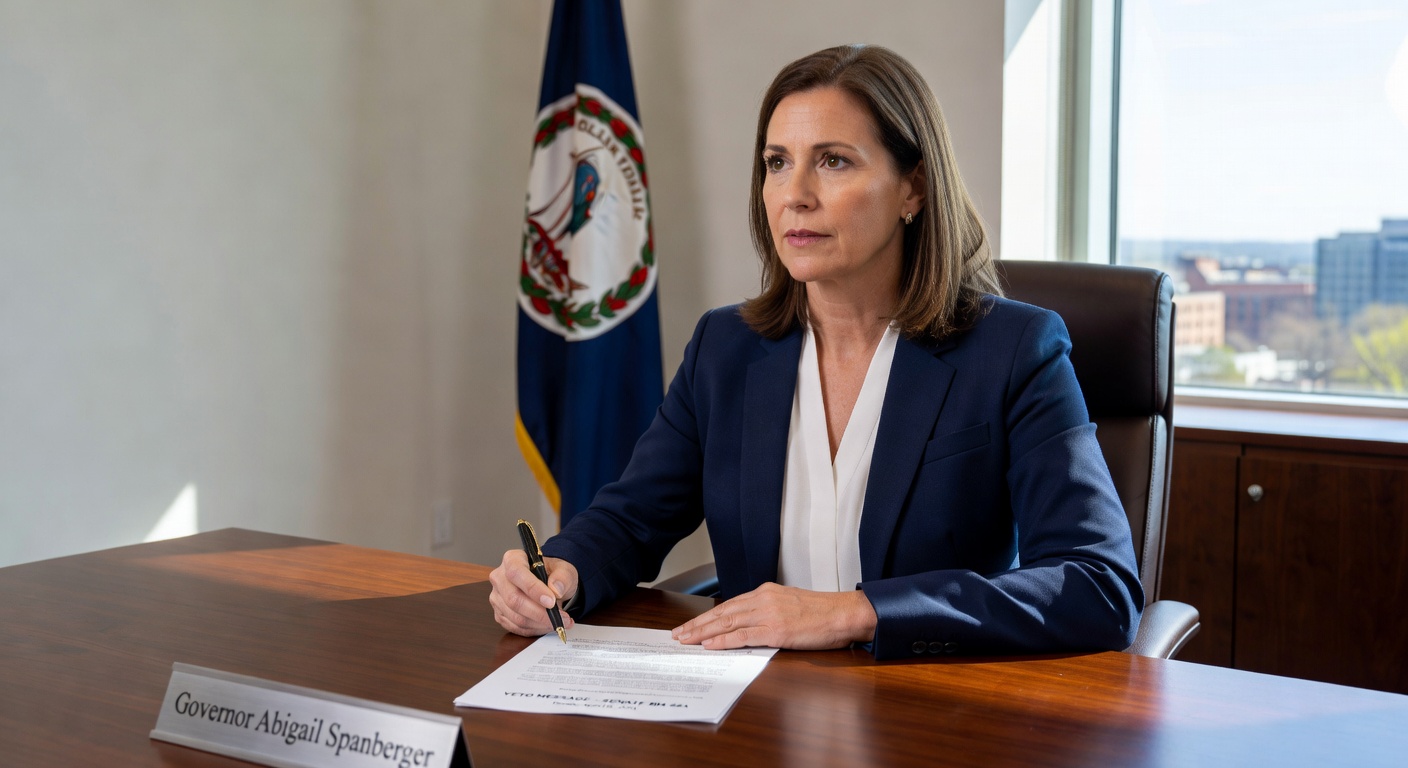
On a crisp April day in 2026, Governor Spanberger announced the veto from her Richmond office, emphasizing how the bill disrupted the balance between state oversight and local autonomy; according to her official statement on the governor's newsroom site, this decision aligned with broader principles of governance where communities retain control over land-use decisions tied to gambling expansions.
Observers note that the veto came swiftly after the bill's passage, signaling preparedness amid Virginia's evolving casino landscape; Spanberger, who has navigated multiple gaming-related proposals during her tenure, framed the rejection as a safeguard against piecemeal overrides that could erode trust in local boards across the commonwealth.
Key Provisions of the Overturned Bill
- Forced a binding referendum on the Tysons casino project within Fairfax County by the end of 2026.
- Bypassed the Board of Supervisors' veto power on the ballot question.
- Outlined potential licensing through the Virginia Lottery, with proceeds earmarked for education and transportation.
- Allowed developers to proceed if voters approved, despite zoning hurdles.
Those details, drawn from legislative summaries, reveal why supporters hailed it as a democratic tool, while critics saw it as heavy-handed state meddling in hyper-local affairs.
Reasons Behind the Veto: Local Authority and Precedent Concerns
Governor Spanberger pinpointed the bill's core flaw in overriding Fairfax County's explicit opposition, noting that such mandates could unleash a cascade of similar state interventions elsewhere; she advocated instead for a statewide independent commission to handle all gambling regulations uniformly, ensuring fairness without pitting Richmond against individual localities.
What's interesting here is how this fits Virginia's recent gambling trajectory: since commercial casinos gained approval in 2020 via a constitutional amendment, projects have sprouted in places like Danville, Portsmouth, and Bristol, each vetted through local referendums that passed with strong majorities—typically 60-70% according to election data—yet Tysons represented uncharted territory for urban density and proximity to the capital.
And while proponents countered that a casino could generate $500 million annually in new revenue—figures from economic impact studies—the governor stressed that gambling decisions demand holistic review, not forced votes that sidestep zoning laws adn community input processes honed over decades.
Fairfax County's Stance on the Tysons Proposal
The Fairfax County Board of Supervisors, representing a jurisdiction with over 1.1 million residents and a median household income topping $130,000, had voiced unified resistance; board members highlighted Tysons' evolution from a mall-centric area into a tech and office corridor, where developments like the Silver Line metro expansion already strain parking and transit, and adding a casino, they argued, would amplify those pressures without proportional benefits.
Take one public hearing from late 2025: residents packed the chambers, voicing worries over increased crime rates observed in other casino host cities—data from the Virginia State Police showed a 15-20% uptick in certain incidents near new gaming venues—alongside environmental impacts on nearby parks and streams; supervisors, acting on that feedback, declined to advance the project, prompting the bill as a workaround.
Now, with the veto in place, the board regains full leverage, and developers face steeper hurdles to revive talks, perhaps through voluntary negotiations rather than legislative mandates.
Virginia's Broader Gambling Regulatory Framework
Virginia's gambling scene has ballooned since 2018, when lawmakers first authorized horse racing and sports betting; by 2026, five commercial casinos operate under the Virginia Lottery's oversight, contributing over $700 million in taxes since inception—per state revenue reports—while skill games and historical horse racing machines dot convenience stores, sparking separate regulatory battles.
Yet Spanberger's push for an independent commission echoes expert recommendations from groups like the Joint Legislative Audit and Review Commission, which in 2025 reports urged centralized control to curb proliferation and ensure problem-gambling safeguards; this veto, then, positions her stance as forward-looking, potentially influencing how future bills balance expansion with structured governance.
People who've tracked these developments often point to precedents: in 2022, Henrico County rejected a Richmond-area casino push, leading to its relocation, and similar local no-votes have reshaped maps, underscoring that Virginia's model empowers communities unless state law explicitly overrides—a line this bill crossed.
Reactions from Stakeholders and Lawmakers
Supporters of Senate Bill 756, including casino backers Urban One and Colonial Downs Group, expressed disappointment, with statements claiming the veto shortchanges economic opportunities in a region hungry for post-pandemic recovery; lawmakers who championed the measure vowed to explore overrides or refiled versions, though Virginia's veto override threshold—two-thirds in both chambers—proves daunting, succeeding only twice since 1971.
On the flip side, Fairfax officials and anti-gambling advocates celebrated, with the Fairfax County Federation of Citizens' Associations calling it a win for "home rule"; Governor Spanberger's office, meanwhile, reiterated commitment to equitable growth, hinting at upcoming proposals for that independent body to streamline approvals without local arm-twisting.
Potential Ripple Effects on Virginia's Casino Landscape
This veto doesn't kill Tysons dreams outright—developers could pivot to persuasion or new sites—but it reinforces local veto power, a dynamic that's funneled projects to more receptive rural and urban-edge spots; data indicates those operational casinos now employ over 6,000 directly, with indirect jobs pushing past 20,000, yet urban cores like Tysons remain off-limits for now.
Here's where it gets interesting: as Virginia eyes a sixth casino license, allocated via 2020 legislation, competition heats up between Northern Virginia hopefuls and others, and Spanberger's commission idea could centralize vetting, reducing bills like 756 that target single locales.
Those studying the sector note parallels in other states—Maryland's National Harbor casino thrives near D.C., drawing cross-border play, but Virginia's caution tempers that rush, prioritizing sustainability over speed.
Conclusion
Governor Spanberger's veto of Senate Bill 756 in April 2026 stands as a pivotal moment, affirming Fairfax County's authority over Tysons Corner's fate while spotlighting the need for unified gambling oversight; as Virginia's industry matures, this decision shapes precedents, ensuring expansions respect local voices and pave the way for regulated growth that benefits the entire commonwealth without fracturing its governance structure.
In the end, the ball's now squarely in developers' and lawmakers' courts, where negotiation trumps coercion, and Tysons watches closely as the next chapter unfolds.