How RNG Algorithms Adapt Across Roulette Variants in Regulated Digital Platforms
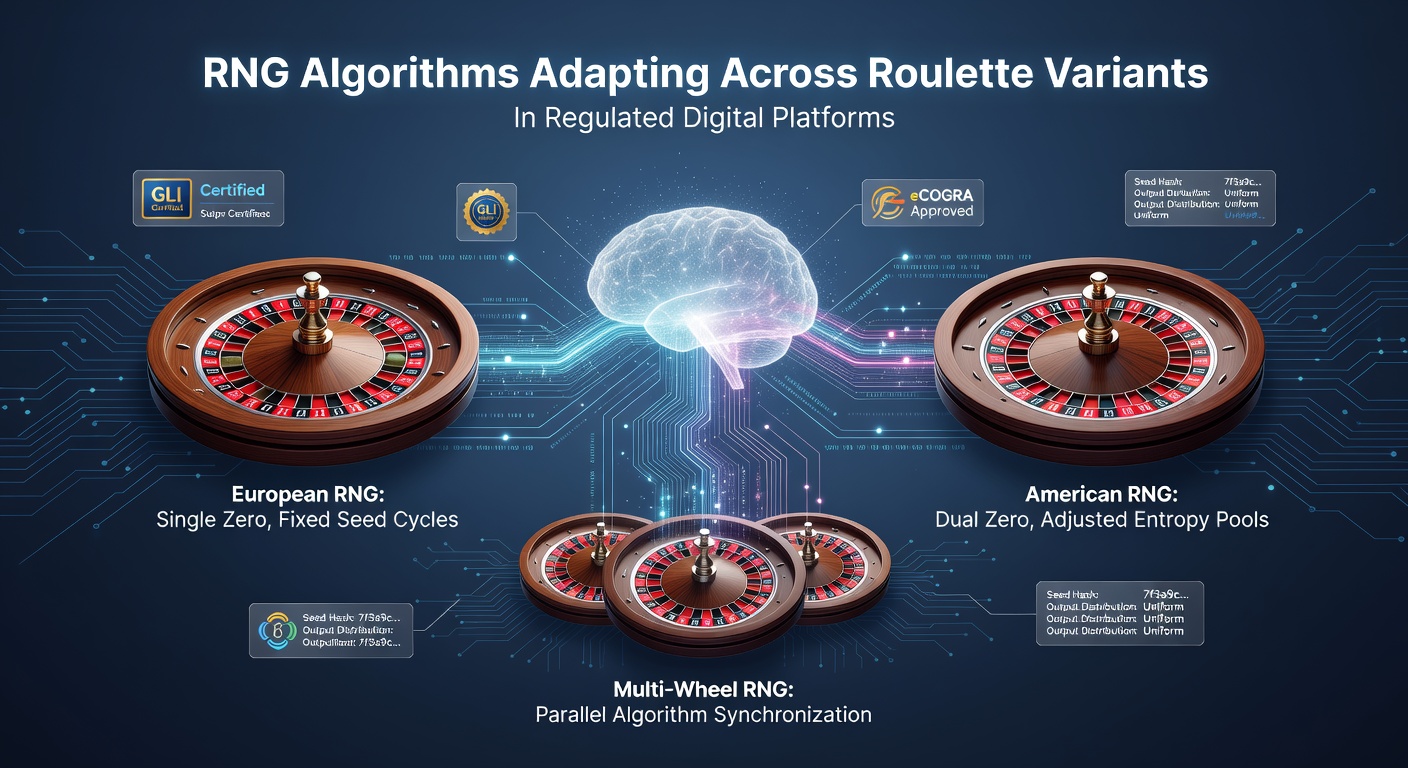
Regulated digital platforms rely on random number generators that adjust parameters to match each roulette variant's wheel structure and payout rules, and data from testing laboratories shows these systems undergo variant-specific certification before deployment. European roulette wheels contain 37 pockets while American versions add a double zero to reach 38, which means the underlying RNG must map outputs across different ranges without introducing bias during continuous play sessions. Platforms in multiple jurisdictions update seed values and distribution algorithms in real time to maintain statistical uniformity across these differing pocket counts.
Core RNG Mechanics in Standard Variants
Basic RNG implementations generate sequences that correspond directly to wheel positions, and certification reports indicate that European and American variants use the same core pseudo-random functions but apply different modular arithmetic to align with pocket totals. When a player selects a European table the algorithm draws from a 0-to-36 range, whereas American tables expand that range to include the extra pocket, and regulatory audits verify that transition between variants does not compromise independence of successive spins. Those who've examined certification documents note that both variants require passing chi-square and serial correlation tests at identical confidence levels before operators receive approval.
Adaptations for Specialized Wheel Formats
Mini roulette reduces the wheel to 13 numbers, which forces RNG code to scale its output modulus accordingly while preserving uniform probability across the smaller set, and platform logs from May 2026 show increased deployment of these compact variants in mobile applications. Lightning roulette introduces random multipliers on select numbers each round, requiring the RNG to handle two separate functions: one for ball landing position and another for multiplier assignment, and industry testing data confirms that these dual streams remain statistically independent. Observers note that the multiplier RNG often draws from a weighted distribution to control overall return-to-player percentages within regulatory limits set by state gaming authorities.
Regulatory Oversight and Certification Processes
Gaming control boards in Nevada and Ontario require independent laboratories to evaluate RNG performance under each variant's specific rules before live deployment, and figures released in early 2026 reveal that over 120 separate test cases now cover multiplier mechanics alone. Algorithms must demonstrate resistance to prediction even when operators switch between variants within the same player session, and continuous monitoring systems flag any deviation beyond established tolerance thresholds. Platforms integrate hardware security modules that reseed generators at irregular intervals, and reports from the Ontario Lottery and Gaming Corporation detail how these reseeding events occur without interrupting active games.

Technical Implementation Across Platforms
Developers embed variant parameters within configuration files that the RNG engine reads at runtime, allowing a single codebase to support multiple wheel types without recompilation, and source code reviews conducted during audits confirm that these configuration switches do not create predictable patterns. When a player moves from a standard European table to a Lightning variant the system loads new weighting tables for multipliers while the core position generator continues uninterrupted, and performance metrics collected across thousands of sessions show no measurable increase in processing latency. Regulated operators maintain detailed change logs that document every parameter adjustment, and these records become subject to review during annual compliance examinations.
Future Developments in RNG Flexibility
Emerging platforms explore dynamic wheel configurations where pocket counts can change mid-session under controlled conditions, which demands even more robust RNG architectures capable of instant modulus recalculation, and preliminary findings from academic research groups indicate that quantum-resistant algorithms may soon supplement existing pseudo-random methods. Data collected through 2026 shows steady growth in the number of certified variants per platform, reflecting both regulatory acceptance and player demand for format diversity. Those monitoring the sector point to continued refinement of testing protocols that now include cross-variant correlation analysis to ensure independence remains intact when multiple game types operate simultaneously.
Conclusion
Regulated digital platforms maintain RNG systems that scale and reconfigure to accommodate every roulette variant's unique specifications, and ongoing certification combined with real-time monitoring supports consistent fairness across European, American, mini, and multiplier-enhanced formats. The technical adaptations documented in laboratory reports and regulatory filings demonstrate how a single underlying generator can serve diverse wheel structures without compromising statistical integrity or player trust. As new variants continue to appear, the same principles of modular output mapping and independent stream generation will guide further evolution in RNG design.