Inside the Development Process of Roulette Apps: From Algorithm Design to User Interface Testing
Developers approach roulette app creation through structured phases that begin with algorithm architecture and extend through rigorous interface validation, while regulatory frameworks in multiple jurisdictions shape each decision from the outset. The process integrates mathematical modeling with platform constraints, and teams coordinate across specialized roles to produce applications that meet technical standards established by bodies such as the Nevada Gaming Control Board and the Alcohol and Gaming Commission of Ontario. As of August 2026, studios continue to refine these pipelines in response to evolving device capabilities and cross-border certification requirements.Algorithm Design and Random Number Generation
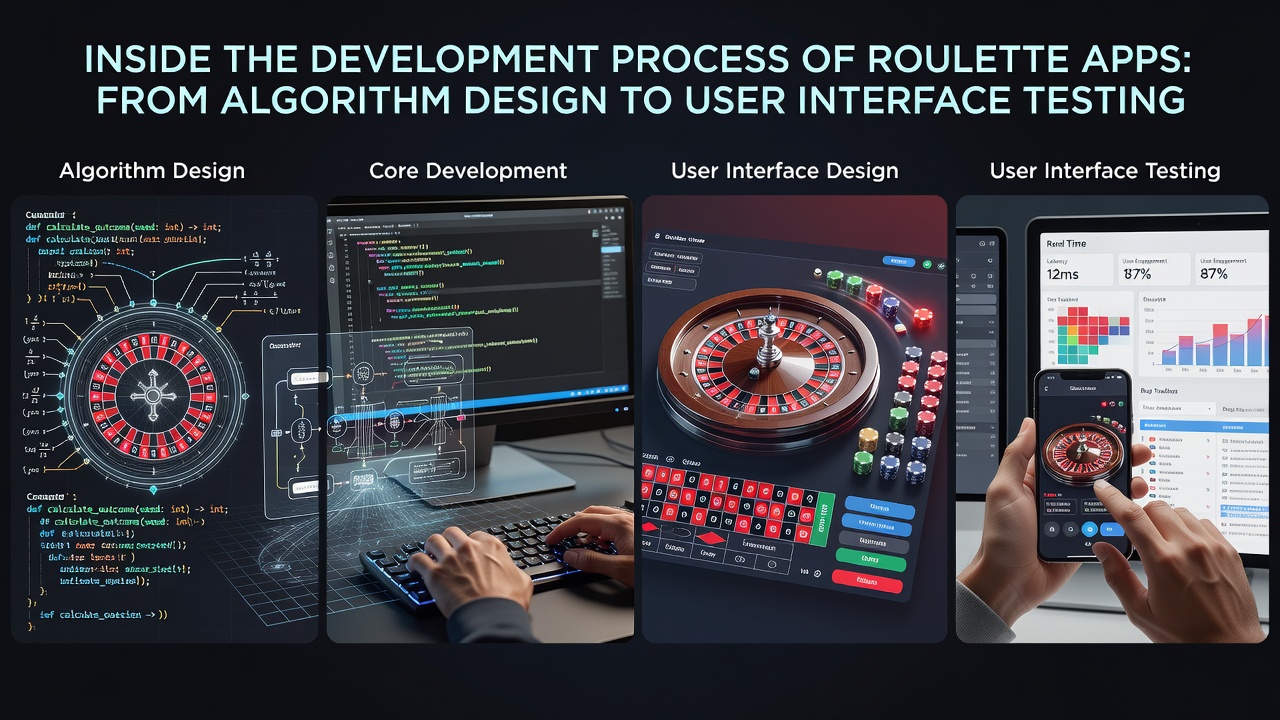
Algorithm teams start by selecting pseudorandom number generators that satisfy statistical tests outlined in international gaming laboratory standards, and they embed seed management protocols that prevent predictability across millions of simulated spins. Engineers map variant-specific rules such as European single-zero layouts or American double-zero configurations directly into modular code blocks, which allows later updates without full system recompilation. Data from certification reports shows that approved RNG implementations undergo continuous entropy evaluation during both development and post-launch monitoring cycles.
Integration testing follows initial coding, where developers verify that virtual wheel outcomes align with expected probability distributions under varying load conditions, and they document every parameter adjustment for audit trails required by licensing authorities. One project revealed that minor floating-point adjustments in multiplier calculations for lightning-style variants demanded revalidation across three separate testing environments before approval.
Platform Adaptation and Compliance Layers
Once core algorithms stabilize, engineers layer in jurisdiction-specific compliance modules that handle reporting formats demanded by regional regulators, while maintaining consistent outcome fairness across desktop and mobile deployments. These modules track session data, enforce responsible gaming limits, and transmit anonymized metrics to oversight portals without exposing player identities. Observers note that synchronization between RNG outputs and compliance logs prevents discrepancies that could delay certification timelines.
User Interface Construction and Interaction Flows
Design groups translate algorithmic outputs into visual and tactile elements, beginning with responsive layouts that adapt wheel rendering and betting grids to screen sizes ranging from compact handhelds to large tablets. They incorporate color contrast ratios that meet accessibility guidelines, and they position chip selection controls to minimize reach errors during rapid betting sequences. Animation timing receives careful calibration so that wheel deceleration matches real-world physics references while preserving computational efficiency on lower-end hardware.

Interaction prototypes undergo iterative refinement based on logged user gesture data, which reveals patterns such as preferred swipe directions for chip stacking and optimal placement of history panels. Developers embed fallback mechanisms that maintain interface responsiveness even when network latency spikes during live dealer handoffs.
Multi-Stage Testing Protocols
Testing cycles begin with automated unit verification of RNG calls and progress through integrated system checks that simulate concurrent user sessions across geographic regions. Manual exploratory sessions follow, during which testers evaluate edge cases including rapid bet cancellations, orientation changes mid-spin, and recovery after interrupted connections. External laboratories then conduct independent audits that include source code review and statistical sampling of generated outcomes before any public release.
Researchers at institutions studying digital gaming systems have documented how interface latency under one hundred milliseconds correlates with higher session completion rates, prompting teams to optimize rendering pipelines accordingly. Bug tracking systems capture every anomaly with timestamped recordings, enabling precise reproduction during remediation sprints.
Conclusion
The complete development arc for roulette applications therefore links mathematical integrity at the algorithmic core with polished, accessible interfaces that undergo layered validation. Regulatory alignment remains embedded throughout rather than appended at the end, and ongoing monitoring sustains performance after deployment. This sequential yet interconnected workflow supports consistent delivery of certified products across evolving device ecosystems.