Mapping Regulatory Differences That Affect Live Dealer Integration in Cross-Border Casino Platforms
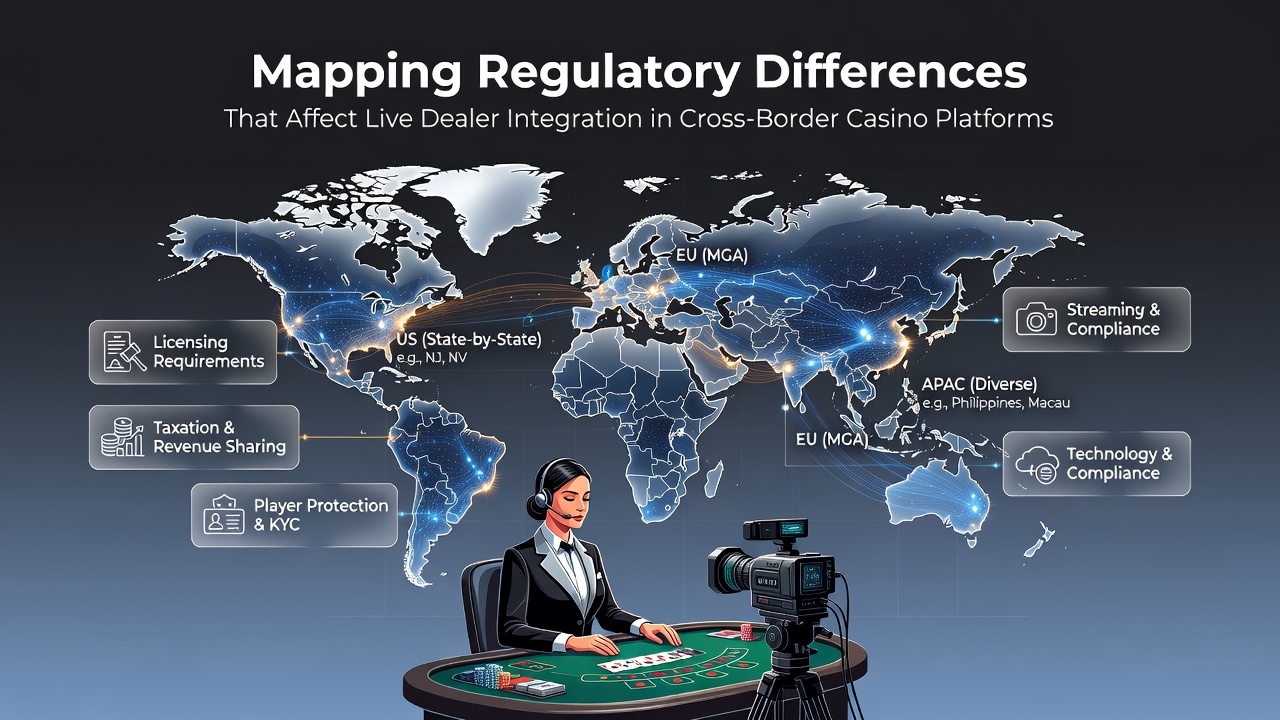
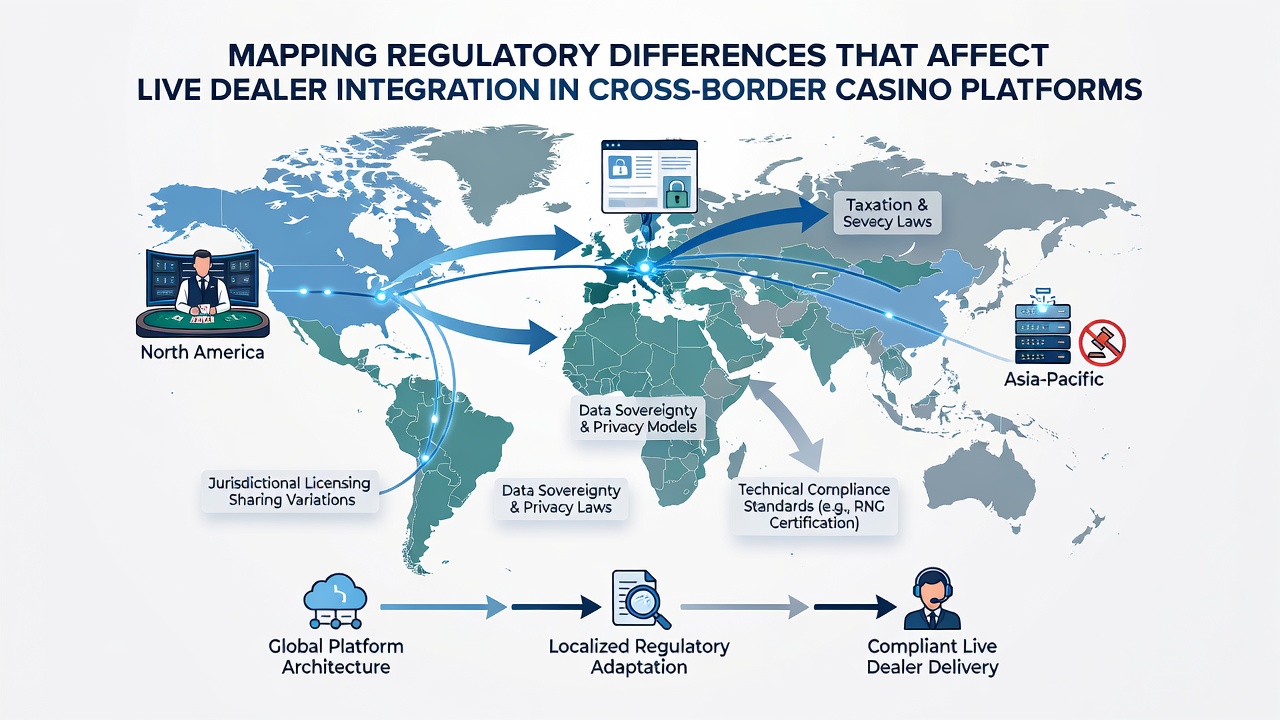
Live dealer integration in cross-border casino platforms requires alignment with multiple layers of licensing rules, data transmission standards, and streaming protocols that vary sharply by jurisdiction, and operators must map these differences carefully to maintain service continuity. Regulatory bodies in North America, Europe, and Asia-Pacific impose distinct requirements on real-time video feeds, dealer verification processes, and player data handling, which creates technical and legal hurdles when a single platform serves users from several regions at once.
North American Licensing Variations and Their Impact
State-level rules in the United States create one set of constraints while Canadian provincial frameworks establish another, and these differences directly influence how platforms embed live dealer streams into their cross-border offerings. In Nevada, for example, the Gaming Control Board mandates that all live dealer feeds originate from licensed facilities within the state, which means operators cannot simply route European or Asian streams into Nevada-licensed accounts without additional compliance layers. Michigan and Pennsylvania follow similar geographic sourcing rules, yet they permit certain data processing functions to occur outside state lines provided encryption standards meet local thresholds.
Ontario's Alcohol and Gaming Commission applies a different model that allows approved international studios under strict certification, and platforms operating in June 2026 have reported streamlined integration after aligning with the province's updated technical standards for latency and identity verification. This approach contrasts with stricter U.S. state requirements and forces operators to maintain separate feed infrastructures depending on the user's location, which increases both cost and complexity for cross-border services.
European Union and National-Level Requirements
Within the European Union, the interplay between the overarching e-Commerce Directive and individual member state gambling laws produces another layer of regulatory mapping challenges for live dealer platforms. Malta's regulatory authority permits remote live dealer operations under a single license that covers multiple EU markets, yet Germany and the Netherlands each enforce additional local server mandates and real-time reporting obligations that platforms must satisfy separately. These national variations require operators to segment their video routing and compliance logging systems so that streams destined for German users pass through approved domestic nodes while Maltese-licensed feeds continue uninterrupted for other EU jurisdictions.
Observers note that platforms serving both EU and non-EU markets in June 2026 have adopted modular architecture designs precisely because of these fragmented rules, allowing selective activation of compliance modules without rebuilding entire live dealer infrastructures. Data protection rules under GDPR further complicate integration because player identity verification data collected during live sessions must remain segregated according to each country's storage and access protocols.
Asia-Pacific Approaches to Live Dealer Operations
Asian regulatory environments add further distinctions, particularly in markets such as Singapore and Australia where live dealer integration faces strict content and technology controls. Singapore's Casino Regulatory Authority requires that all live dealer activities occur within licensed physical premises on the island, which effectively bars cross-border streaming from foreign studios unless operators establish local facilities that meet exacting security specifications. Australia applies state-by-state rules that permit certain offshore feeds under conditional approvals, yet each state demands unique audit trails and real-time monitoring feeds that platforms must deliver through separate compliance channels.
These geographic restrictions have prompted operators to develop region-specific integration roadmaps that account for both licensing geography and technical infrastructure, and data from industry reports indicate that platforms maintaining separate Asian and European live dealer clusters achieve faster regulatory approvals than those attempting unified global architectures. As of June 2026, several operators have documented reduced integration timelines after mapping these differences at the outset of platform development rather than retrofitting solutions later.
Technical and Compliance Mapping Strategies
Effective mapping begins with a jurisdiction-by-jurisdiction inventory of required certifications, permitted streaming origins, and data residency rules, and operators then overlay these requirements onto a unified technical framework. Research from gaming technology providers shows that platforms using geo-fenced content delivery networks can satisfy multiple regulatory regimes simultaneously by routing live feeds through compliant pathways while maintaining consistent user experiences. Such systems also allow rapid adjustment when new rules emerge, as occurred with several European updates in early 2026 that altered encryption minimums for live sessions.
Those who have studied these patterns observe that successful cross-border operators maintain dedicated compliance teams for each major region and rely on automated rule engines to flag potential conflicts before deployment. This approach reduces the risk of service interruptions when regulatory changes occur in one market while operations continue elsewhere.
Conclusion
Mapping regulatory differences remains essential for any platform seeking to deliver live dealer content across borders because licensing geography, data rules, and technical mandates rarely align perfectly. Platforms that systematically catalog these variations and build flexible infrastructures accordingly continue to expand their reach while meeting the distinct demands of each operating region.